| Version 1 (modified by , 9 years ago) ( diff ) |
|---|
D4.5: New language Sketch Grammar module
As explained in D4.2, it is not realistic that the construction of the sketch grammar is fully automated. For construction of new the sketch grammars, we used the new methodology described in D4.2 which uses the questionnaires filled-in by native speakers.
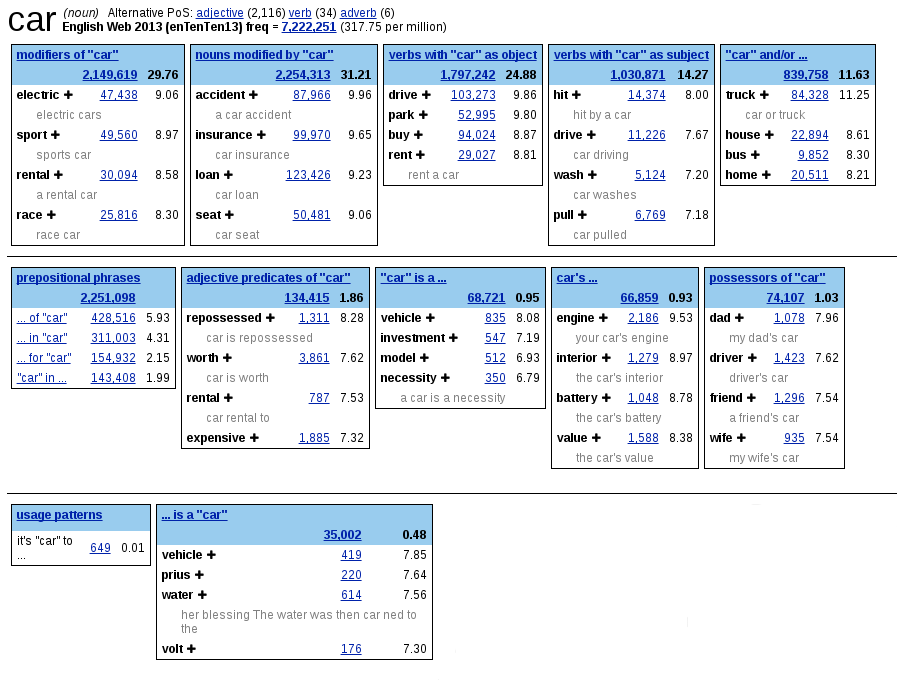
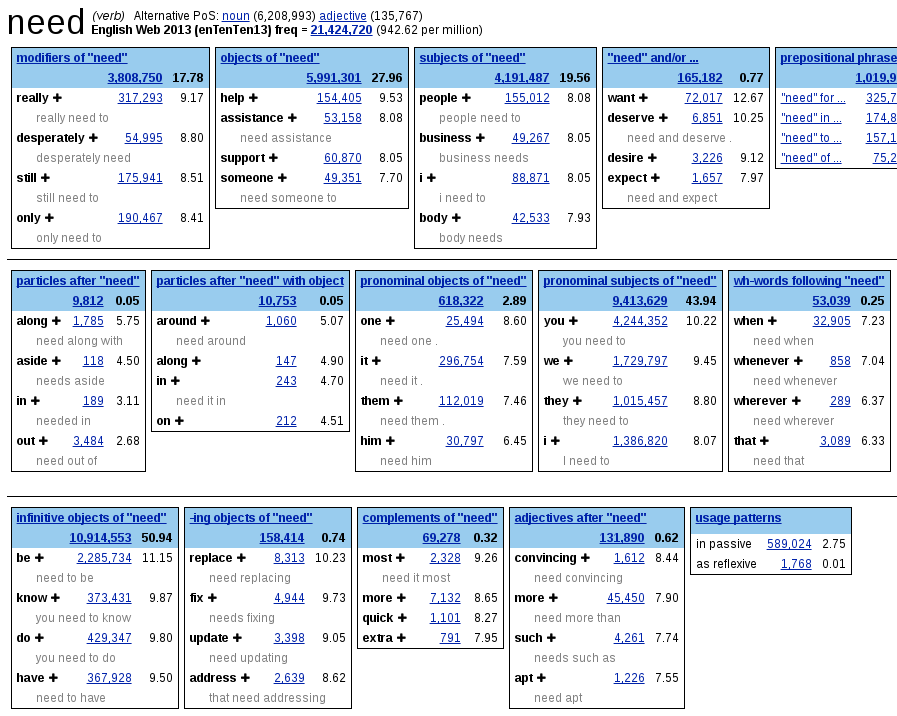
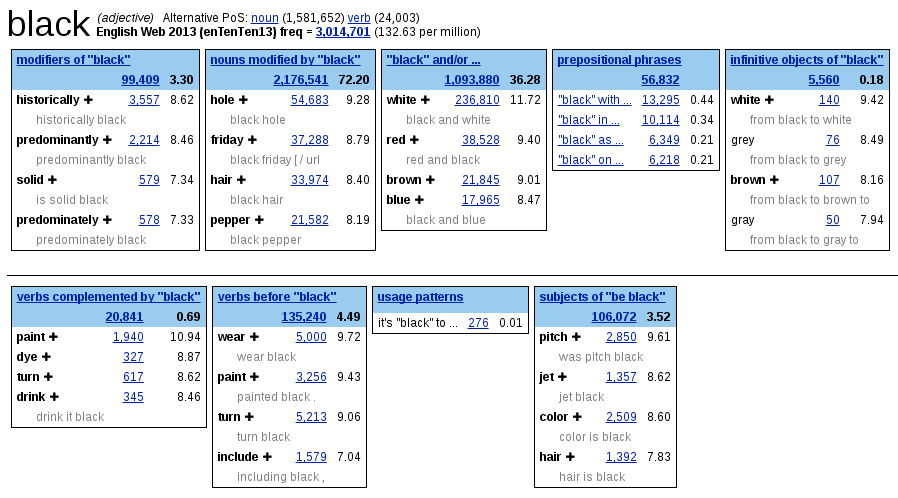
The basic form of the sketch grammar has the following relations (%w in the name of the relation is replaced by a particular headword):
- ="%w" and/or ... capturing coordinations
- objects of "%w"/verbs with "%w" as object capturing objects, both complement relations
- subjects of "%w"/verbs with "%w" as subject for subjects
- "%w" is .../subjects of "be %w" for adjective predicates and subjects
- "%w" is a .../... is a "%w" for noun predicates and subjects
- pronominal objects of "%w"
- pronominal subjects of "%w"
- modifiers of "%w"/nouns modified by "%w" for noun modifiers
- modifiers also for other parts of speech:
- modifiers of "%w"/adjectives modified by "%w"
- modifiers of "%w"/adverbs modified by "%w"
- modifiers of "%w"/verbs modified by "%w"
For this version of the grammar, the respective parts of the questionnaire are used which means roughly the first 2/3 of the questionnaire.
The full version of the sketch grammar has the following relations, in addition to the ones listed above:
- possessed/possessor typically named according to how the possessor relation is expressed in the language
- pronominal possessors of "%w"
- wh-words following "%w"
- infinitive objects of "%w"
- gerund objects of "%w" in case the language uses gerund
- adjectives after "%w"/verbs before "%w" for adjective complements of verb
- prepositions after "%w"
- range of unary relations according to typical constructions used in the language; common language-independent parts include usage of the words in singular/plural, with various verb tenses and other morphological categories.
Attachments (4)
- car_en.png (90.2 KB ) - added by 9 years ago.
- need_en.png (108.6 KB ) - added by 9 years ago.
- black_en.png (75.4 KB ) - added by 9 years ago.
- car_pp_en.png (105.4 KB ) - added by 9 years ago.
Download all attachments as: .zip
Note:
See TracWiki
for help on using the wiki.